Africa’s ocean economy remains under-capitalised despite strong climate- and nature-positive opportunities. This interactive discussion brings together investors, DFIs/philanthropy, insurers, corporates and pipeline builders to raise awareness, align on best practices for investing with integrity, and identify partners to accelerate capital deployment into investable ocean solutions.
The first edition of “Building Bridges” in 2019 brings together diverse stakeholders in dialogue around the issues at stake.
Learn more about the 2019 Summit here.

The Summit is the marquee event that kicks off the 2023 edition of Building Bridges.
Learn more about the 2023 Summit here.
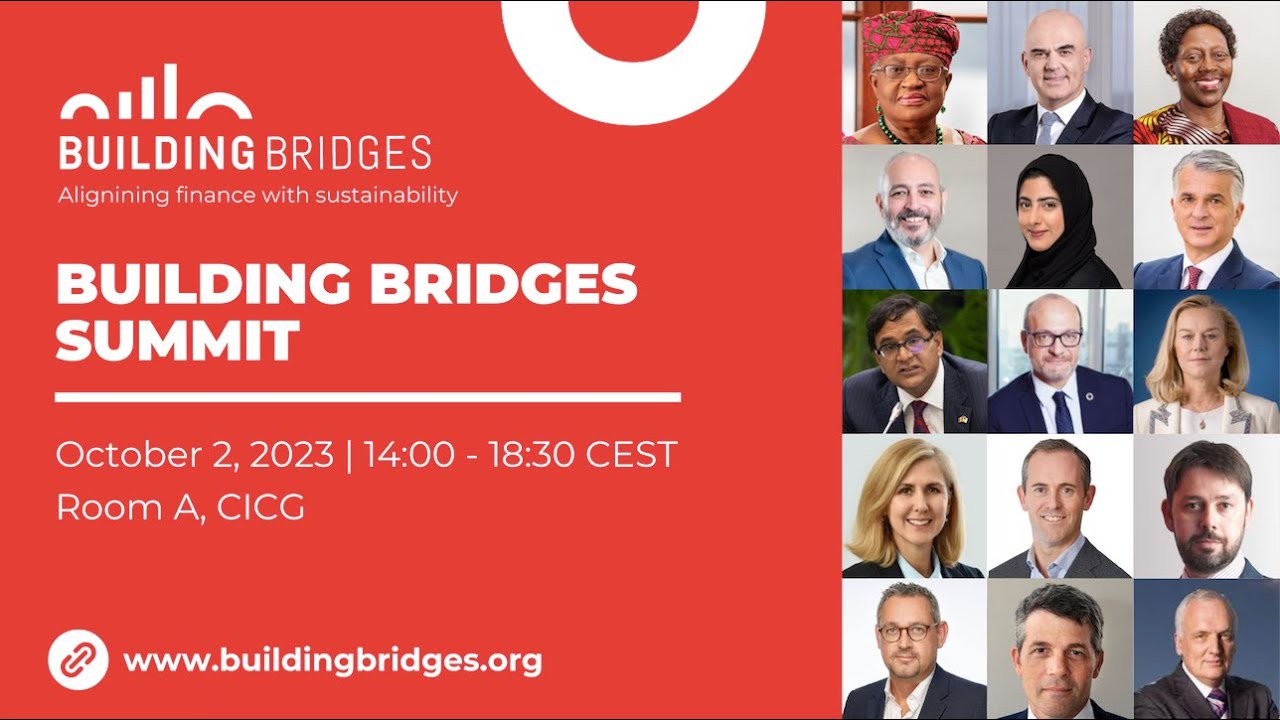
This webinar will explore how data and market intelligence can accelerate capital flows into impact-driven private markets in Sub-Saharan Africa (SSA).
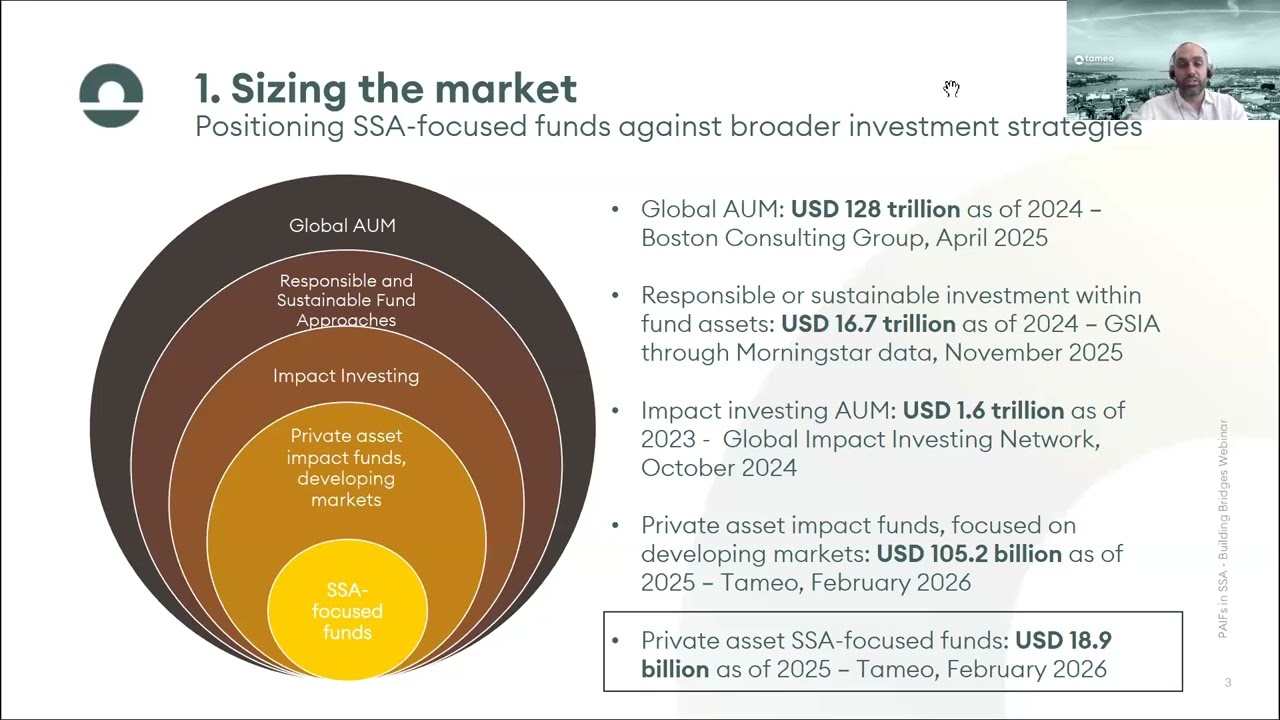
In the first part, Tameo will present key findings from its latest Private Assets Impact Fund report, with a dedicated focus on SSA. As the region hosting the largest number of impact funds globally, either through dedicated vehicles or multi-regional allocations, SSA represents a dynamic and evolving market. The session will examine the current investment landscape, including sectors, asset classes, fund strategies, market size, and historical trends. Tameo will also benchmark SSA-focused funds against the broader global impact universe, highlighting differences in portfolio construction, risk-return dynamics, investee profiles, and impact management practices. The presentation will provide practical insights into how limited partners can drive impact by engaging with specialized fund managers and tailored investment products.
In the second part, representatives from the African Private Market Associtation (AVCA) and the African Venture Philanthropy Alliance (AVPA) will join the discussion to translate research into action. They will first introduce how their respective research and market insights complement Tameo’s Private Assets Impact Fund report. Speakers will then explain how data can be used concretely to mobilize capital and inform allocation decisions, demonstrating how market intelligence supports more effective investment strategies. The discussion will also touch upon the critical role of African institutional and private capital as well as investigate specifically how to close funding gaps across underserved sectors and segments of the private markets.
Key Takeaways
- Sub-Saharan Africa Impact Investment Trends. Presenting findings from Tameo’s Private Asset Impact Funds report, Ramkumar Narayanan highlighted that a significant share of capital in the region is publicly funded (around 82%), underlining the continued dependence on concessional finance to anchor funds.
- African Private Capital Markets Show Resilience and Maturity. Referring to the upcoming African Private Capital Association African Private Capital Activity Report 2025, Nadia Kouassi Coulibaly noted a 34% decline in fundraising (USD 2.7 billion), but emphasised resilience with USD 5.1 billion invested across 530 deals and increasing exit activity, signalling a stabilising and maturing market.
- Data Intelligence Is Transforming Social Investment Decisions. Introducing African Venture Philanthropy Alliance’s Social Investment in Action platform, Tafadzwa Nyagano explained that the tool was developed to tackle the fragmentation of impact data and support decision-making by structuring large volumes of information into actionable insights for investors.
- Transparency, Risk Perception, and Impact Comparability Remain Key Barriers. Drawing on Tameo research, Safeya Zeitoun identified a lack of benchmarks, limited market data, and high due diligence costs as key barriers. She emphasised that insufficient transparency contributes to persistent risk misperceptions and slows capital deployment.
Watch the Recording
Explore the Materials
- Sign up here for the Tameo’s Private Asset Impact Fund Report 2025
- Sign up here for AVCA’s 2025 African Private Capital Activity
- AVPA’s Social Investment in Action platform
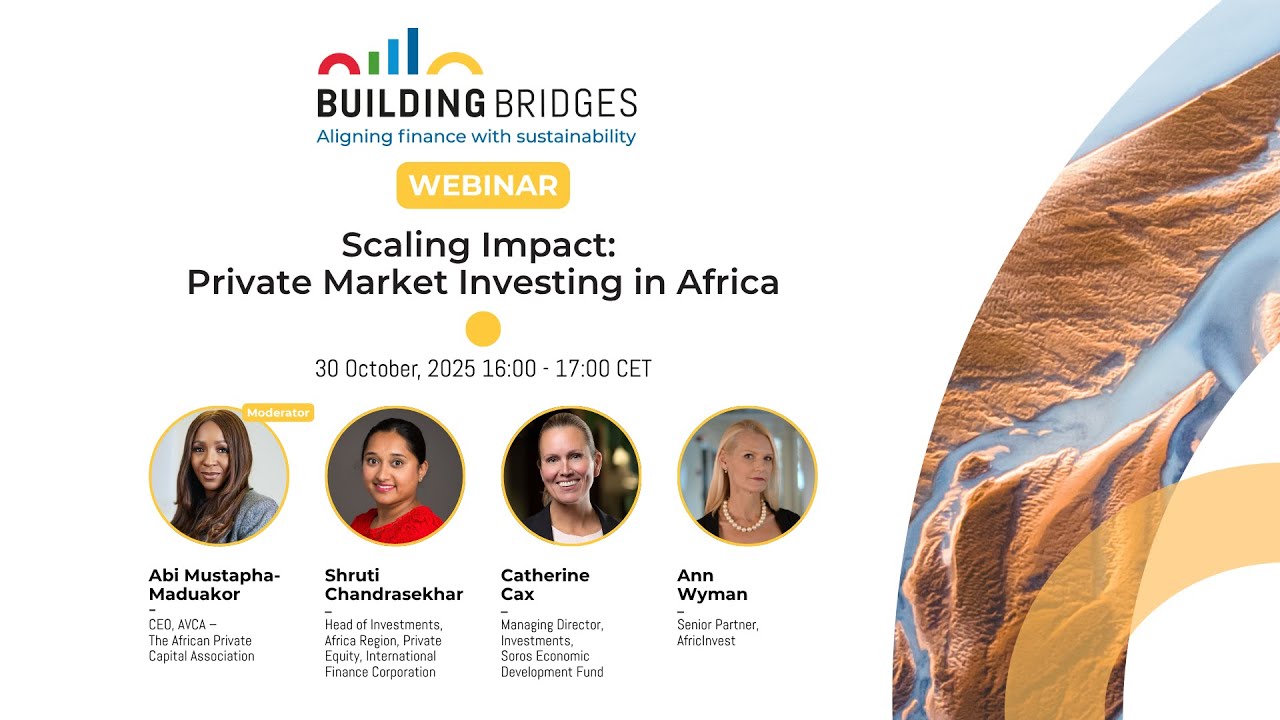
Africa’s private markets are at an inflection point. With a young, rapidly growing population, accelerating technology adoption, and pressing needs across infrastructure, healthcare, agriculture, and climate resilience, the continent offers investors unique opportunities to achieve both competitive returns and meaningful impact. Yet, scaling private capital in Africa requires navigating diverse regulatory frameworks, building trusted partnerships, and designing investment models that can drive inclusive and sustainable growth.
This webinar brings together leading voices from across the African private capital ecosystem to explore how private equity, venture capital, and blended finance strategies are being deployed to unlock long-term value. Speakers will discuss the evolution of the fundraising landscape, how local fund managers are shaping impact outcomes, and the ways in which global investors can participate in Africa’s next phase of growth.
Beyond the headline opportunities, the session will also address practical considerations around portfolio construction, exit pathways, and risk management—drawing on real-world examples from across sectors. Participants will gain insights into how private capital is not only financing Africa’s growth but also enabling solutions to some of the world’s most urgent challenges, from climate change to job creation.
Key Takeaways
- Africa’s investment ecosystem is evolving and diversifying. Speakers agreed there is a clear diversification in strategies — from traditional private equity to venture, private credit, and blended finance. This signals growing sophistication and experimentation. Shruti (IFC) noted that whilst overall volumes haven’t surged, the types of vehicles and investors have diversified showing progress in depth and approach.
- Collaboration across capital types is creating new momentum. Speakers identified that real progress is happening where DFIs, philanthropies, and private investors work together. Catherine (Soros Economic Development Fund) highlighted that philanthropic and catalytic funding can play a vital role in unlocking private capital, provided that investors with different risk appetites are engaged early.
- Local capital and currency innovation are big opportunities on the horizon. Local institutional investors and domestic pools of capital are beginning to step forward, offering a path to reduce foreign exchange risk and build resilience. Anne (AfricanVest) emphasised the need for local capital participation to manage FX exposure, suggesting blended structures that tap domestic pools.
- Smarter exits and flexible fund models will unlock growth. The panel agreed that exits are the weakest link in Africa’s private markets — too few, too slow, and often mismatched with investor expectations. Shruti (IFC) stressed that predictable exit pathways are essential for recycling capital and attracting new LPs. Catherine (Soros Economic Development Fund) added that Africa’s growth story requires more patient and flexible models, such as platform structures or longer-dated vehicles, that reflect the continent’s different liquidity cycles.
Watch the recording
This year, Building Bridges is proud to feature a new collaboration with the International Film Festival and Forum on Human Rights in Geneva (FIFDH), bringing the power of film into our dynamic programme.
Together, we will screen Scars of Growth, by Monika Grassl & Linda Osusky. A timely and thought-provoking documentary on the social and environmental realities of Europe’s Green Deal. This addition to our event provides another entry point to spark dialogue on sustainable finance and will be preceded by a short discussion, moderated by FIFDH, featuring filmmaker Monika Grassl and other voices from the Building Bridges community.
About the film
The Green Deal is Europe’s new growth strategy, framed as a solution to avert climate collapse. By promoting electric cars and renewable energy, Brussels aims to boost economic growth while safeguarding the planet. Yet these “green” technologies require vast amounts of metals, most of which currently come from China. To reduce this dependency, politicians back the reopening of “green mines” in Europe. The communities living on these sites, however, worry that their livelihoods will be forsaken in the name of accelerating the energy transition.
Wrap up the day with refreshments and networking in the Village after the sessions on Tuesday, 30 September.
Wrap up the day with refreshments and networking in the Village after the sessions on Thursday, 2 October.