
From the Moon to the Ground: Bringing Finance Down to Earth
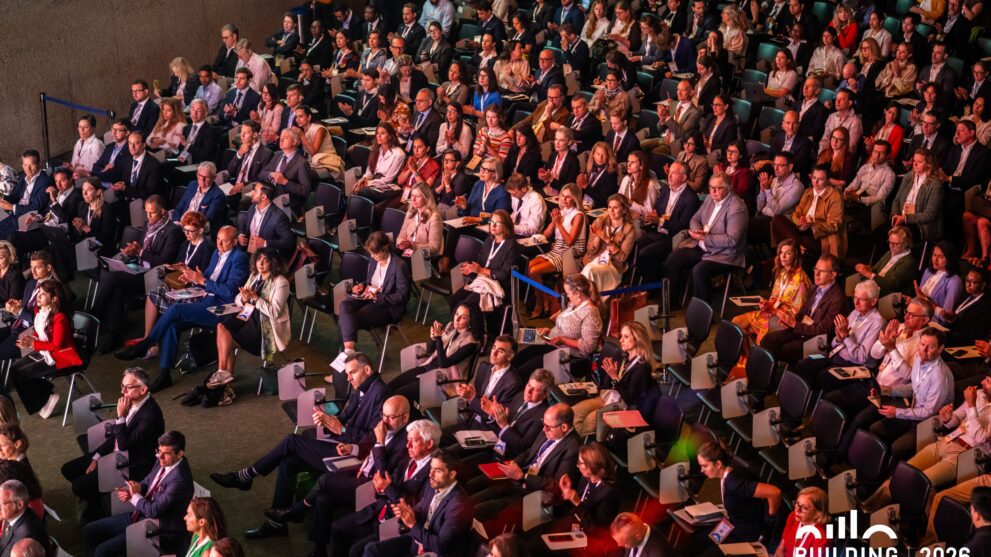
September marked the beginning of my journey into the world of sustainable finance. By October, I found myself surrounded by the very people, institutions and ideas I had only recently begun exploring in my studies. As a student pursuing a one-year Master of Advanced Studies in Sustainable Finance and Impact Investing, Building Bridges was an opportunity to step into this world, ask questions and learn from those working to align finance with sustainability.
Two sessions at Building Bridges particularly challenged how I think about the relationship between finance, people and systems it ultimately serves: “How the Financial Sector Can Help Tackle Economic Inequality” and “Building Sustainable & Scalable Investments in Education & Skills Development.“
The inequality session broadened my understanding of how private sector drivers can influence not only people’s livelihoods but also wider inequalities and the health and stability of our systems. Discussions touched on corporate incentives, remuneration, living wages across supply chains and where companies pay their taxes. What I initially approached from a more micro perspective, thinking about how we can bring those disconnected from the labour market into the system, became a broader discussion about how we can change the incentives and structures within the system itself. The work of the Taskforce on Inequality and Social-related Financial Disclosures (TISFD), for instance, also highlighted the importance of understanding and addressing inequality as a source of system-level risk.
The education session brought another dimension to this challenge: mobilising capital does not necessarily mean that it translates into meaningful outcomes on the ground. We heard about the scale of the education challenge, from teacher shortages to the millions of children whose education is disrupted by conflict, and explored instruments such as guarantees, blended finance platforms, concessional loans and grants to help address financing gaps. Yet, despite the availability of these instruments, execution remains a significant bottleneck. One observation that stayed with me was the risk of creating “islands” of financed projects that never develop into something more scalable. Getting children into school, for example, is one challenge; ensuring they stay there and receive a quality education is another.
A comment from the inequality session particularly stayed with me: “We [investors] are on the moon; people are on the ground.” I found this a powerful way of describing the disconnect that can emerge between those designing and mobilising financial solutions and the people those solutions are ultimately intended to serve. It resonated with the education discussion too. We can develop innovative financial instruments, mobilise capital and create promising investment opportunities, but how do we ensure these efforts translate into meaningful outcomes on the ground? Perhaps the challenge is not only about finding the right financial instruments, but also about building the bridges between finance, policy and the people who need these solutions.
In September, I was not yet aware of the multi-layered world of sustainable finance, from catalytic finance and de-risking models for nature-based solutions to impact-linked finance. However, after having the pleasure of attending the three-day conference in October, I was exposed to current case studies where these concepts were not only introduced to me for the first time but also illustrated in practice.
What I particularly appreciated was the curated environment that encouraged knowledge sharing. I valued the opportunity to not only absorb knowledge from the speakers but also participate in roundtable conversations and open discussions, where we could hear different perspectives from participants who all had valuable insights to share. It was a true testament to the purpose of the conference. We weren’t there solely to listen to those with expertise in the field; there was equal importance placed on engaging with and learning from one another. After all, we are not experts versus participants, but rather all participants working towards a shared challenge: how can we bring together our different areas of expertise to make sustainable solutions investable and mobilise finance where it is needed most? It is through these connections and exchanges that we can begin to identify common ground, bridge different areas of expertise and find ways to work together towards solutions.
No textbook, and not even ChatGPT, could compensate for what Building Bridges has given me. I left the conference not only with a greater understanding of the sustainable finance landscape but, more importantly, with an even stronger enthusiasm to continue learning, exploring and finding ways to engage in this space. Thanks to the Building Bridges team, I couldn’t be more grateful for their efforts to bridge generational gaps in knowledge and make these conversations accessible to students like myself. Thank you, Building Bridges team, for creating an experience that has brought additionality to my own personal development, and for leaving me with the curiosity and motivation to continue building on what I’ve learned.
Author: Nalani Gruys, Master of Advanced Studies in Sustainable Finance, Impact Investing and Development, Geneva Graduate Institute.
Guest Contribution: This article is brought to you in collaboration with the Geneva Graduate Institute, an Ecosystem Partner of Building Bridges 2026.
Photo Credit: Antoine Tardy
Note: The views, information, data and figures presented in Guest Contributions are those of the respective authors and do not necessarily represent views or position of Building Bridges. Information, data and figures provided by guest contributors have not been independently verified by Building Bridges.