
Reflections from the IPBES-12 Post-Plenary Business & Finance Summit
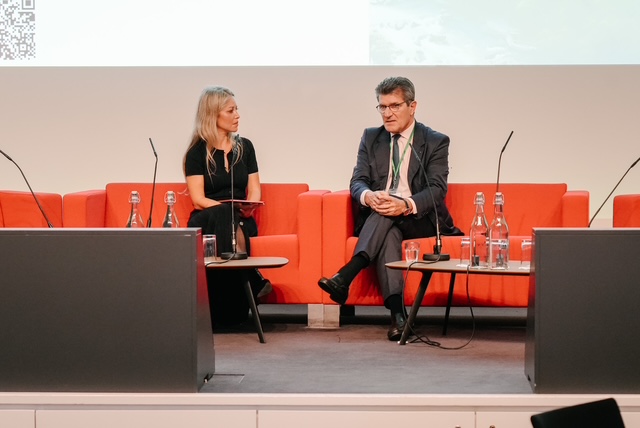
On 4 March 2026, the Royal Society in London hosted the NatureAlpha IPBES‑12 Post‑Plenary Business & Finance Summit, bringing together finance, policy, science and civil‑society representatives for discussions on turning nature intelligence into actions that transition businesses into the future.
Our Chair, Patrick Odier, opened the afternoon programme with Keynote Perspective conversation with Vian Sharif, Founder and President of NatureAlpha, highlighting how rapidly the nature agenda has entered mainstream finance. He noted that nature‑related risks are increasingly viewed as financial risks, and that long‑term value creation depends on integrating science into decision‑making. Patrick also underlined the practical role of convening, emphasising that cross‑sector platforms help move stakeholders from shared intent toward implementable solutions.
Reflections shared after the event reinforced several themes important to the Building Bridges community:
- The IPBES Business & Biodiversity Assessment offers actionable guidance for companies.
- The financial materiality of nature is becoming clearer, supported by real‑world examples.
- There is urgency, balanced by optimism around forthcoming global standards and rising engagement.
- Climate transition efforts provide useful lessons for the nature transition.
- A successful transition must be inclusive and collaborative to ensure long‑term resilience.
Looking ahead, Patrick pointed to the need for the “next architecture” to scale action where capital allocation and business models genuinely reflect nature’s value.
About NatureAlpha
NatureAlpha is a dynamic AI fintech business for preeminent nature risk data and analysis. They provide AI and data-driven insights to support a range of solutions including nature and biodiversity risk-related metrics, indexed products, compliance tools and nature-linked financial consulting. NatureAlpha utilises curated datasets from the world’s most authoritative scientific, regulatory, corporate and governmental sources including internationally agreed goals as detailed in the Convention for Biodiversity and IUCN, and in line with the Task Force for Nature-related Financial Disclosures’ framework. www.naturealpha.ai.
About IPBES
The Intergovernmental Science-Policy Platform on Biodiversity and Ecosystem Services (IPBES) is an independent intergovernmental body established by States to strengthen the science-policy interface for biodiversity and ecosystem services for the conservation and sustainable use of biodiversity, long-term human well-being and sustainable development. It was established in Panama City, on 21 April 2012 by 94 Governments. It is not a United Nations body. However, at the request of the IPBES Plenary and with the authorization of the UNEP Governing Council in 2013, the United Nations Environment Programme (UNEP) provides secretariat services to IPBES. The 12th Session of the Plenary of the IPBES (IPBES-12) was held in Manchester, UK, from 3-8 February 2026, with a Stakeholder Day on February 2. The primary focus was the launch of the Business and Biodiversity Assessment, examining the impacts of economic activities on nature. www.ipbes.net.