Investing in Resilience in a Riskier World
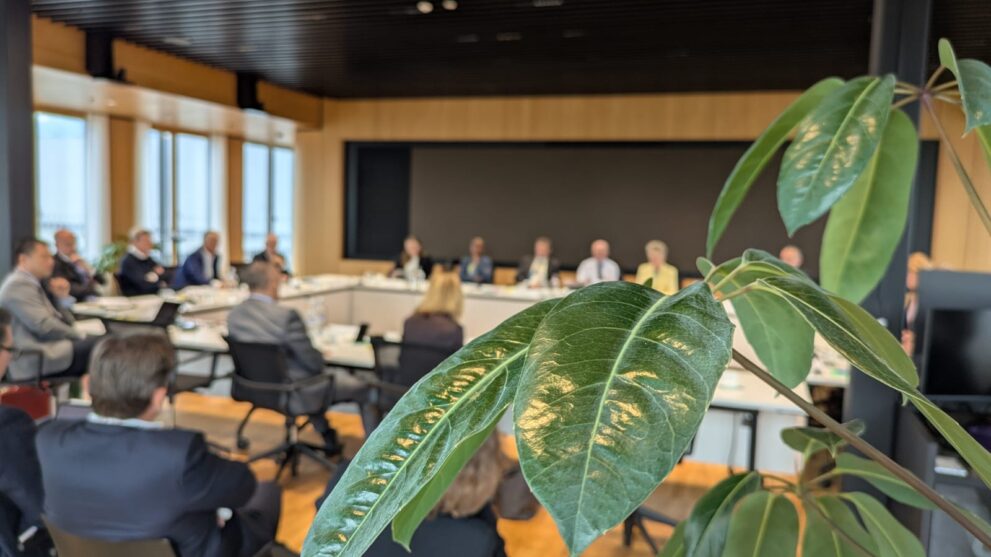
During Climate Week Zurich, we were proud to convene a high-level roundtable with Zurich Insurance Group bringing together representatives from government, finance, international organisations, and industry, to discuss how resilience is being understood, financed and operationalised across sectors. The discussion focused on three questions: how the definition of resilience is evolving, where progress has been made in financing resilience, and what is needed to move from diagnosis to action.
Resilience is broader than climate alone
Participants highlighted that resilience is no longer confined to climate adaptation. While climate impacts remain central, resilience is increasingly shaped by energy security and affordability, geopolitical fragmentation, defence considerations, debt constraints, supplychain disruptions and water stress. Whilst climate risks do not stop at borders, reinforcing the need for international coordination, there was also strong emphasis on local, community-level solutions.
Financing resilience: progress and remaining barriers
Participants noted significant progress over the past decade. Financing mechanisms related to climate and resilience have become more sophisticated and broader in scope, and discussions of this kind would not have been possible ten years ago. Energy security featured prominently. With a large share of global energy imported, vulnerabilities in supply chains remain acute, particularly in parts of Asia. The balance between mitigation and adaptation is shifting, with growing attention on adaptation, while mitigation remains critical.
From risk awareness to action
Despite a broader decline in multilateralism, international adoption of disclosure standards has progressed rapidly. Regulators are acting not only in response to environmental concerns, but because physical and valuechain risks pose fundamental challenges to market infrastructure. Capabilities and tools continue to improve, including data analytics, scenario analysis, disclosures, geospatial analysis and emerging uses of artificial intelligence. These tools are helping organisations better understand physical risk and resilience across value chains. Overall, the discussion underscored that resilience is moving from a technical sustainability topic to a core strategic concern, requiring collaboration across sectors and practical pathways from analysis to action.
The event also provided an occasion for Celeste Saulo, WMO Secretary-General, to launch the WMO Weather, Climate and Water Intelligence Commons.
—
About Climate Week Zurich 2026
The inaugural Climate Week Zurich took place from 4–9 May, 2026, and saw over 250 events taking place across the city with over 10,000 participants. Learn more at www.climateweekzurich.org