Web3 offers new pathways for digital and economic inclusion globally. Making quality web3 education more accessible is needed to enable these inclusion pathways for the workforce of today and tomorrow. This session will explore current initiatives, and future potential.
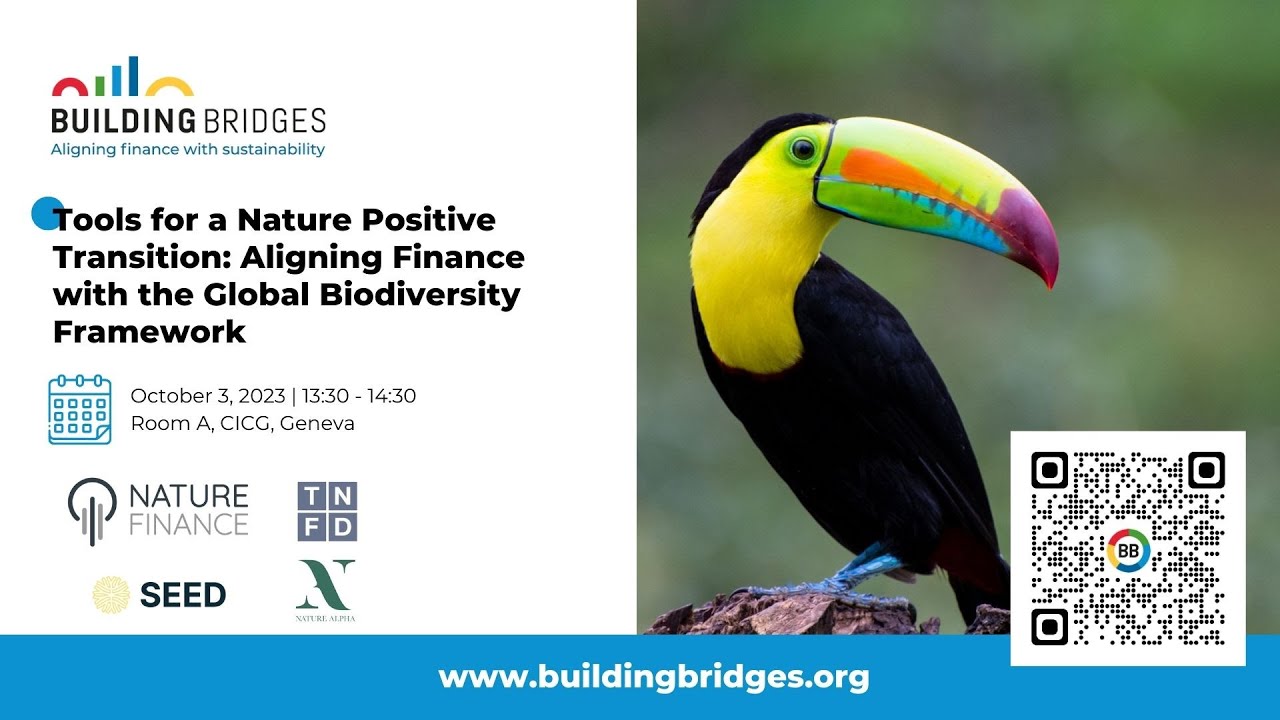
New tools and metrics are available for the financial sector – private and public – to assess their alignment with the goals and targets of the Global Biodiversity Framework, and to plan for a Nature Positive, Net Zero transition. This solution oriented event will highlight lessons learned from recent pilots.
This will be a platform for practitioners to share expertise in the use of SDG, thematic bonds and debt swaps and reprofiling (or write-offs) to identify key success factors and weaknesses. This dialogue will inform the formulation of principles for the design of such mechanisms to deliver sustainable development outcomes.
An engaging session exploring the concept of post-growth economics and its implications for the finance sector. Join industry experts and creative minds to ask the following questions: What are the opportunities in the post-growth economy? What does it mean for finance? How can we build sustainable business models for a post-growth economy?
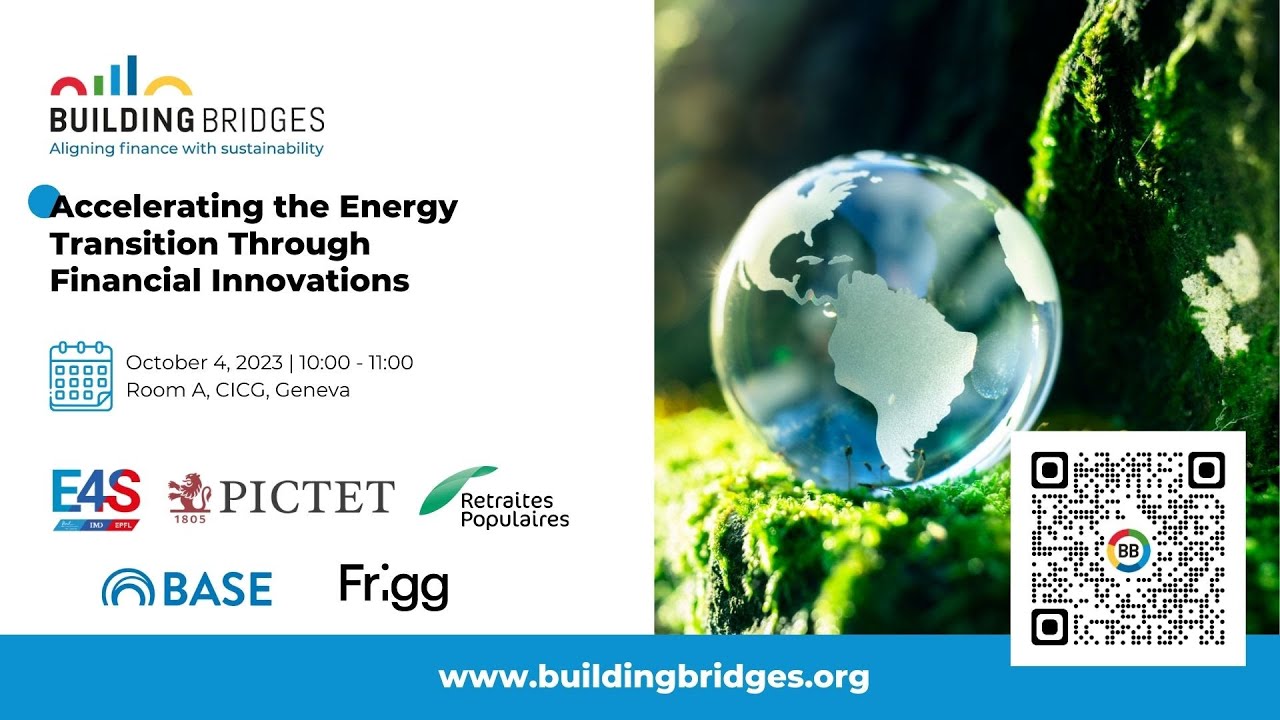
Transitioning away from carbon-intensive energy sources in the next decade is crucial. The financial industry can play a role in this transition, namely through creative approaches and asset classes. This event will showcase applied research, industry perspectives and financial innovations, such as Servetia’s business model, and Frigg’s decentralised finance platform.
The landmark Kunming-Montreal Global Biodiversity Framework (GBF) agreed by nearly 200 countries at CBD COP15 calls for the global financial sector to align their portfolios with nature positive and net zero outcomes. Innovative instruments, tools and pilot programmes are quickly evolving to enable and finance this transition, leveraging existing platforms and initiatives that bring together market actors, civil society, representatives of indigenous peoples and local communities, experts, and policymakers.
Both regulation and revenue opportunities are driving innovation in two key areas that will be the focus of this webinar:
Shaping frameworks and governance for high-integrity biodiversity credit markets:
Biodiversity credit markets continue to evolve alongside increased levels of technical knowledge on processing the complexity of biodiversity and reflecting it in scaleable market-based approaches. Getting biodiversity credit markets right is a determining factor in achieving our climate, nature, and broader development goals. If we fail to do so, this may impair our ability to reach the global climate and biodiversity goals. For these markets to reach their potential however, and not result in perverse outcomes, the establishment of integrity principles and a robust, actionable governance framework is critical.
Mainstreaming the alignment of financial flows with nature:
Public and private financial instutions, and Governments, need to understand the degree to which their financial flows are aligned or misaligned with nature-related goals. The Nature-Finance Alignment Tool uses existing metrics and frameworks to help financial
institutions not only track the overall alignment of their portfolios, but also to identify less aligned regions and sectors, and to address some of the key disclosure metrics linked to TNFD.
Speakers
-
Jeremy Eppel, Associate Principal, NatureFinance
- Mark Halle, Senior Advisor, FC4S
- Dorothee Herr, Senior Associate, NatureFinance
- Maxim Vergeichik, Senior Nature Economist, UNDP
Moderator:
-
Marguerite Culot, Director of programmes and partnerships, IFD
Governments can significantly accelerate progress towards environmental sustainability through policies, but also by promoting public private collaborations and investment. How credibly a government commits is key to the success of companies that operate in the country. How can investors assess government’s commitment to sustainability?