From Geneva to Belém: Brazil at the Heart of the Nature-Finance Transition
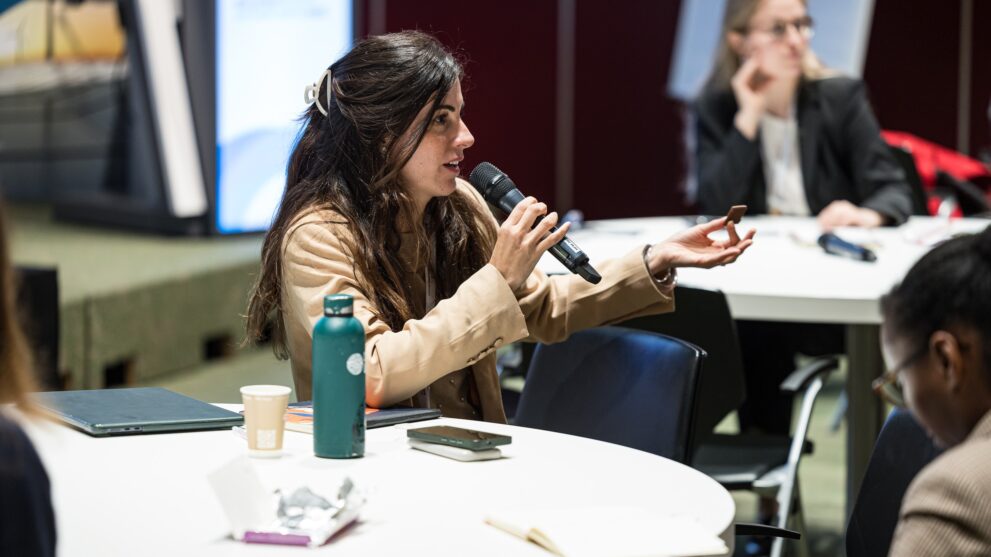
Just weeks after Building Bridges 2025 wrapped up in Geneva, preparations are intensifying for COP30 in Belém. Brazil, home to the largest tropical forest on Earth and a growing force in sustainable finance, will host what many are calling the “Nature COP.” To understand how finance is being mobilised for nature, we spoke with Luana Maia, Lead, Global Brazil at NatureFinance, to learn more about the progress being made and what to expect from the milestone event.
You were very active at Building Bridges this year. What stood out to you about how people were connecting at the event, especially on the topic of nature?
There was a clear shift in the perception of nature’s value, and that felt different from previous editions. People have been talking about nature and nature-related risks for some time, but this year the conversation was more pragmatic. Participants were openly acknowledging their dependence on nature, even if they still don’t quite know how to price it.
The real challenge now is how to value nature in a meaningful way. Some were speaking about the idea of a “nature bundle”, recognising that we can’t measure a single bird or tree in isolation. Nature is a system, a landscape, and that makes pricing much harder than carbon, which has a clear unit. The question is: what is the unit of nature we are pricing?
And to have any pricing, we first need to know where the demand comes from. Demand will come from those who depend on nature: the beneficiaries. Think of the biocosmetics, biopharmaceutical, mining or energy industries: all have deep dependencies on nature, yet few truly reflect this in their business plans. The value is there, nobody denies that but we still face a big gap in knowing how to price it.
You lead NatureFinance’s work in Brazil. Why is Brazil such a pivotal place right now for connecting finance, climate, and nature?
Brazil is home to the largest tropical forest in the world: the Amazon. Around 60% of the Amazon basin lies within our borders, spanning nine countries, and Brazil holds the largest share. We’re also the world’s ninth-largest economy. So any nature-based, bioeconomy or nature finance solution must, at some point, be tested in a nature-rich country like Brazil.
But it’s not only about geography. We are in a very strategic position globally. Brazil hosted the G20 intergovernmental forum in 2024 and will host the 30th Conference of Parties (COP30) of the United Nations Framework Convention on Climate Change (UNFCCC) until November 2026. This places the country at the centre of a crucial transition period, one where we can promote and lead on several fronts of the nature finance agenda.
One major success has been the inclusion of bioeconomy in the official agenda of the UNFCCC for the first time. For us, bioeconomy is nature. It’s how we translate the value of natural systems into economic terms. While nature and climate have always been connected through the UNFCCC and the Convention on Biological Diversity (CBD), we’ve never had a dedicated thematic day for bioeconomy until now.
That milestone stems from Brazil’s leadership of the G20, where national leaders established the G20 Initiative on Bioeconomy and a set of High-Level Principles on Bioeconomy. At COP30, Brazil will take this further by launching the Bioeconomy Challenge: a multilateral effort to keep bioeconomy embedded in global systems and to define a roadmap for its implementation. This work focuses on four areas: market development, financing mechanisms, social bioeconomy, and metrics.
It’s also evidence that nature and bioeconomy are becoming tangible in financial terms. The G20 represents 80% of global GDP and 80% of global emissions. So when the G20 takes a position on bioeconomy, it’s not just a nature-rich country setting priorities, it’s the world’s major economies recognising that nature is central to economic and climate stability.
Can you share an example of how investment is already supporting nature-positive outcomes, and whether this could be replicated elsewhere?
One great example is the Amazon Restoration Linked Bond, issued in August 2024 by the World Bank together with the Brazilian company Mombak (read the World Bank Press Release here). It’s a high-impact debt instrument that links financial returns directly to forest restoration in the Amazon.
Funds raised are used to restore degraded areas with native species and to generate verified carbon credits. It’s one of the largest restoration finance projects in the region and a model that could easily be scaled and adapted to other tropical countries.
Have you seen a change in how local actors, from government to communities, engage on investments in nature?
Yes, absolutely — and one of the clearest examples is our work with the Legal Amazon Consortium (CAL), which represents the nine Amazonian states and their governors. Together, we’re developing a project called Full Protection Environmental Assets in the Brazilian Amazon.
Brazil is home to some of the world’s richest ecosystems and also one of the most advanced legal frameworks for environmental protection. Across the Amazon, vast areas of exceptional ecological value are protected by law within Full Protection Conservation Areas, where economic activity is largely prohibited to preserve biodiversity and ecosystem integrity.
That protection, however, carries a cost. The states of the Legal Amazon have chosen to limit economic activity in these territories in order to deliver global public goods, including regulating rainfall, storing carbon, protecting species, and safeguarding water security. Yet maintaining these areas depends heavily on limited public budgets.
Our work with the consortium aims to address this challenge. Together, we are creating a state-led, science-based framework to generate high-integrity biodiversity credits from verified conservation outcomes in these protected areas. The approach builds on Brazil’s existing Payment for Environmental Services (PES) legislation, providing a rigorous, transparent mechanism to value and finance nature protection by linking measurable ecological outcomes to private and blended capital.
The project establishes clear ecological, legal and financial methodologies, turning verified results such as ecosystem connectivity, habitat integrity and threatened species into credits backed by auditable data and transparent governance. This could become a blueprint for financing conservation at scale: improving the fiscal sustainability of Amazonian states, attracting private investment, and reinforcing Brazil’s leadership in nature finance.
COP30 in Belém is being described as a “Nature COP.” What does success look like for you — and what role can the Building Bridges community play?
This COP will be different. It’s the first one held in a nature-rich country since the Paris Agreement, ten years on. Expectations are high that Brazil can help shape a new chapter for global climate and nature finance.
There’s a $1.3 trillion annual gap in nature and climate finance, and public funding alone can’t close it. The private sector must step up. That’s where the Building Bridges community can make a real difference, by mobilising investors and innovators who know how to turn ambition into action.
Brazilian diplomacy has a unique strength, what we call mutirão: bringing people together to move forward, even if not everything is perfect. The worst thing is to do nothing. That spirit is already visible: the pre-COP in Belém was buzzing with momentum, and business coalitions like the Sustainable Business COP are emerging to match the official negotiations with action.
For me, success in Belém means one thing: that nature is finally seen and valued as the foundation of our shared prosperity and integrated with climate agenda.
Watch the Action Event “Nature as a Shock Absorber” organised by NatureFinance.
About NatureFinance
NatureFinance is an international think tank, solutions lab, and global catalyst that designs, tests, and scales financial tools and partnerships to align the global economy with the planet’s boundaries — from sovereign finance to the bioeconomy — making finance work for nature, climate, and people. . It is also a Founding Partner of Building Bridges.
Learn more about NatureFinance at their website
Learn more NatureFinance at COP30
—
We Build Bridges Storytelling Series
Building Bridges is more than just an event, it’s a space for meaningful collaboration, fresh perspectives, and lasting connections. Through our storytelling series, we highlight the personal experiences that shape each edition. If you have a story to share about your engagement with Building Bridges, whether it’s a key insight, a memorable moment, or the impact of the bridges built, we’d love to hear from you!
Photo credit: Pierre Albouy