
Rethinking Capital to Unlock Coastal Ecosystem Resilience
Coastal ecosystems are among the most valuable natural assets on the planet, and it is therefore critical to explore how capital markets can be restructured to protect our planet’s most vulnerable ecosystems. Marine conservation is a sector that overlaps climate adaptation, biodiversity and local livelihoods. Yet despite the profound ecological and social impact, the marine conservation initiatives remain highly underfunded and structurally disconnected from mainstream capital markets.
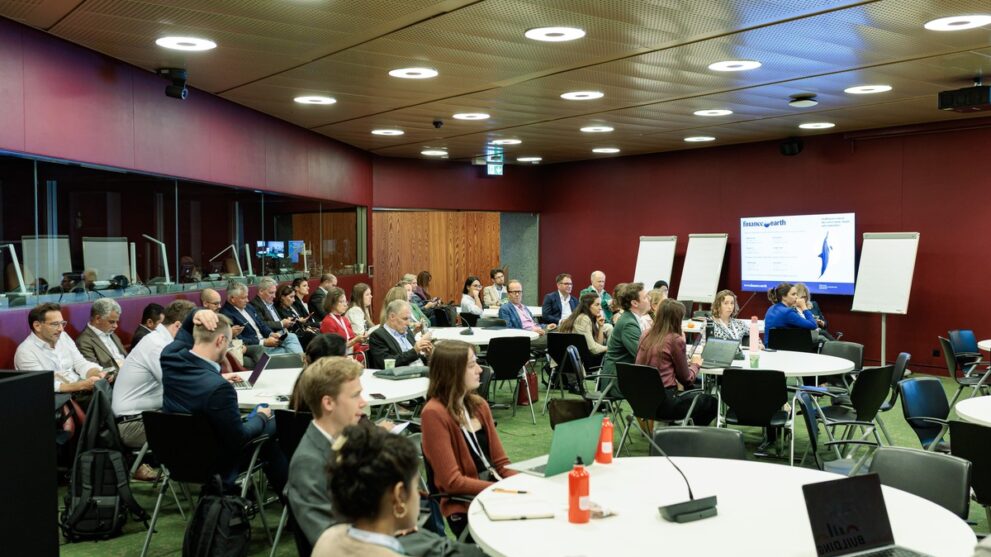
The Building Bridges conference provided a platform to confront this disconnect and discuss practical financial models against the realities of global markets. During the session Unlocking Finance for Coastal Resilience, representatives of impact funds, philanthropic foundations, and sustainable seafood enterprises unpacked the complex realities of funding coastal protection and how financial architecture can be redesigned to bridge the gap between financial markets and marine ecosystems.
Moving Beyond Capital Deployment to Market Infrastructure
A key insight from the panel was the distinction between simply deploying capital and building the underlying market infrastructure. Coastal ecosystems provide immense value. For example, mangroves can capture up to ten times more carbon per hectare than terrestrial rainforests while protecting coastlines from severe storms. However, blue carbon projects account for less than 1% of total credits issued in the voluntary carbon market, where private entities purchase carbon offsets.
The structural disconnect is fuelled by the early-stage financing gap that projects are usually faced with. Before a mangrove restoration project can generate verified carbon credits or commercial revenue, it requires years of high-risk capital to establish scientific baselines, secure land tenure and build local community trust. Ultimately, up to 80% of mangrove restoration efforts fail when short-term funding rushes to plant seedlings without evaluating local hydrology and/or ecological threats.
To address this “valley of death,” the sector should pivot towards appropriate grant mechanisms. Rather than treating grant capital as a one-off subsidy, catalytic capital can absorb early project development risks. Once a project reaches investment readiness and secures commercial implementation debt, the original grant is repaid and recycled into subsequent early-stage initiatives.
Aligning Capital with Local Governance and Operational Realities
In sustainable fisheries, aligning capital with local governance is highly important. Small-scale fisheries represent a crucial food source and economic safety net across the globe. Indeed, they are inherently complex as they are characterised by thousands of species, fragmented supply chains, and informal cash transactions. As panel discussions emphasised, injecting private capital into unmanaged waters without catch controls or management frameworks can actually exacerbate overfishing. Financial capital cannot compensate for absent governance, instead it should function as a supporting mechanism which strengthens and scales management frameworks that are established on the ground.
Where capital succeeds is in targeting operational challenges with clear, bankable returns. For example, in Indonesian small-scale tuna fisheries, fishers face significant post-harvest losses due to a lack of cold-chain infrastructure. By providing capital to install solar refrigeration, fishers reduce catch spoilage, thereby preserving fish quality, boosting local income and decarbonising energy use.
Similarly, integrated restoration models demonstrate that restoring mangrove hydrology within existing coastal farms increases seafood yields by reviving natural food webs. This yields higher productivity with zero synthetic inputs for fertiliser, consequently offering a compelling case for restoration that directly reinforces coastal ecosystem health.
Structural Shifts to Scale Coastal Capital
To move beyond isolated success stories, a few structural shifts emerged as essential for the sustainable finance community:
- To establish an industry-wide investment readiness standard would streamline development and significantly reduce transaction costs.
- Companies that source from the same regions should pool their resources rather than fund isolated projects. When industry players collaborate on shared environmental risks, joint investments can secure the long-term health of their sourcing regions at scale.
- Environmental hazards like severe storms can be systematically underwritten. Utilising climate data and parametric insurance allows managers to price and transfer ecological risk effectively.
Redefining the Role of Sustainable Finance
Discussions at the Building Bridges conference reinforced that sustainable finance cannot be treated as a straightforward matchmaking exercise between investors and projects. Natural ecosystems operate on ecological timelines that standard finance investment templates rarely accommodate.
Achieving long-term impact requires financial architects to design blended structures that reflect environmental and operational complexities on the ground. Moving forward, it is important for the sustainable finance sector to bridge the gap between ecology and practical financial instruments in order to advance capital structures that deliver lasting resilience for marine ecosystems and coastal communities.
Author: Passionate about all things blue, Laylaa Teixeira Sampaio holds a MSc Biology and is currently pursuing a MAS in Sustainable Finance, Impact Investing and Development at the Geneva Graduate Institute.
Guest Contribution: This article is brought to you in collaboration with the Geneva Graduate Institute, an Ecosystem Partner of Building Bridges 2026.
Photo Credit: Antoine Tardy
Note: The views, information, data and figures presented in Guest Contributions are those of the respective authors and do not necessarily represent views or position of Building Bridges. Information, data and figures provided by guest contributors have not been independently verified by Building Bridges.